
Leader Speak with Souveek Chakraborty
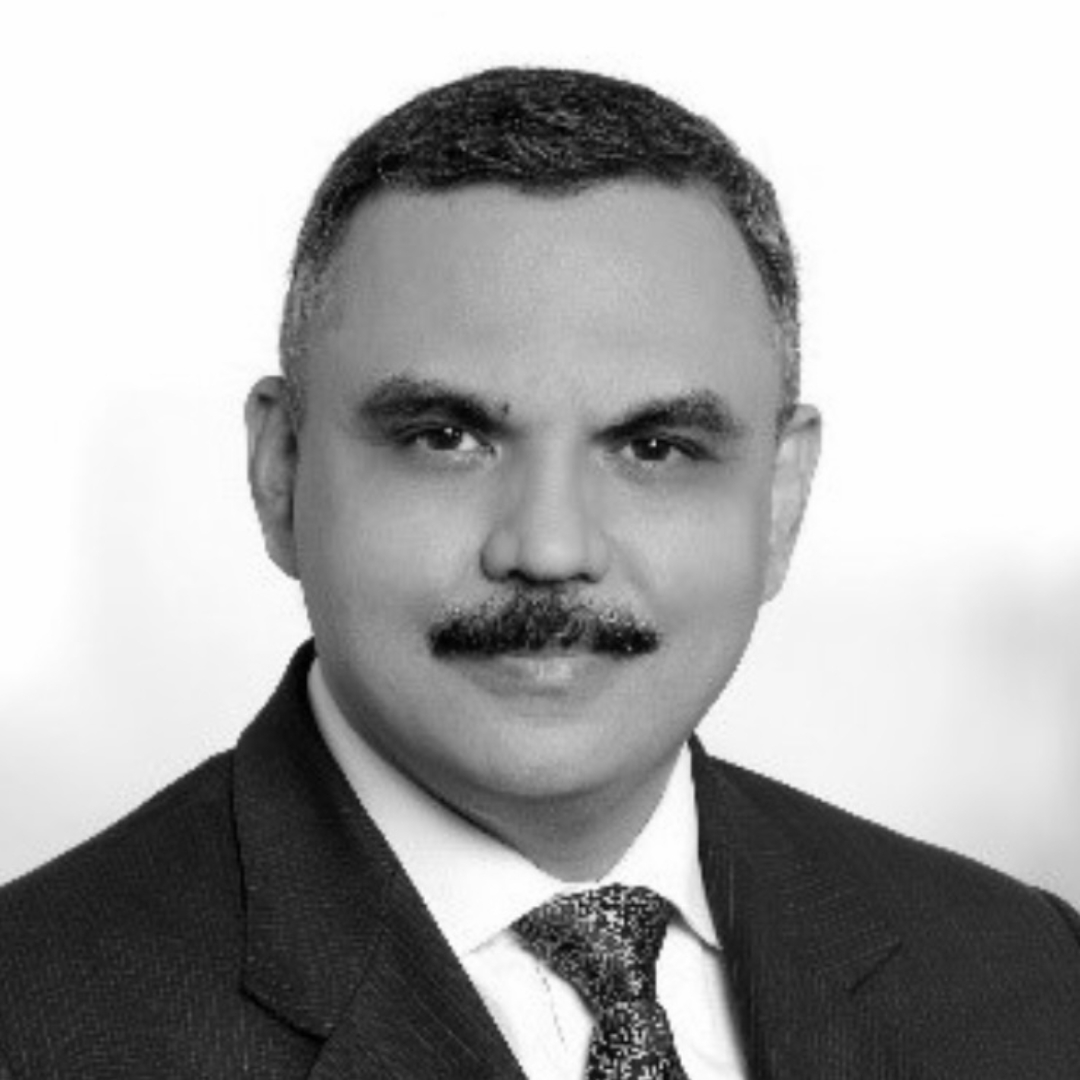
Meytier Senior Partner & India Business Head
Meytier is thrilled to welcome Souveek Chakraborty as a Senior Partner & India Business Head. Souveek brings 36 years of experience spanning enterprise leadership, executive search, leadership coaching, and business consulting. His career has traversed the full arc of India's business evolution — from early roles in sales and operations with a Leading Indian Energy Major and the office automation industry, through a stint with a Technology-focused Venture Capital Firm, to building and selling his own business within seven years.
Meytier Senior Partner & India Business Head
Meytier is thrilled to welcome Souveek Chakraborty as a Senior Partner & India Business Head. Souveek brings 36 years of experience spanning enterprise leadership, executive search, leadership coaching, and business consulting. His career has traversed the full arc of India's business evolution — from early roles in sales and operations with a Leading Indian Energy Major and the office automation industry, through a stint with a Technology-focused Venture Capital Firm, to building and selling his own business within seven years.
I know what it looks like when a global brand treats India as an accomplice centre rather than a market.
Give me a snapshot of your career journey and how you came to be where you are now.
Thirty-seven years is a long arc, and I’ll give you the honest version rather than the sanitised one. I started on the business side — sales, marketing, operations — with a Leading Indian Energy Major, and subsequently in the office automation industry. That commercial grounding has never left me. It’s why I always seek out talented professionals who speak the language of business: you cannot advise a CFO on a leadership hire if you don’t understand the underlying problem and context.
From there I held several roles — first at a Leading Indian Recruitment Firm, then as Global Resourcing Head at an US incorporated IT Services & Consulting Firm, hiring across the Americas, Europe, and Asia. After that I joined a Technology-focused Venture Capital Firm co-founded by some of the world’s most recognisable new age enterprises, which gave me a window into how an early-stage business is built from the inside. I then got bitten by the entrepreneurial bug, built a business, and had it valued in under seven years. That experience, building something and watching someone else see enough value in it to want to acquire it, stays with you permanently.
Then came the role that added a completely different dimension: Group Chief Talent Acquisition Officer at India’s Largest Private Sector Conglomerate, a Top 100 employer. I was responsible for talent acquisition across the enterprise’s existing businesses and its multiple new global ventures. I designed a nationwide campus strategy and conceived and ran an Accelerated Leadership Program with a Global Top Tier Management Consulting Firm, identifying more than 100 high performers aged 27 to 33. Living inside that organisation at that level — understanding how decisions were actually made, how the culture truly operated, where the invisible lines ran — gave me something no external search firm could replicate when I later executed mandates for them.
Threaded through these years, I held India Partner stints at a Global Top 10 Executive Search Firm, then a Top 50 Executive Search Firm, then a second Global Top 10 — close to seven years across global search firms in total. In 2020 I founded an executive coaching and business consulting practice, where some of the mandates I’m most proud of took shape: high-stakes assignments requiring judgment well beyond what a standard search process delivers.
The best talent advisors are genuine business advisors who happen to also run searches. After 37 plus years and more than 1,000 leadership placements, I know the difference.
Why Meytier? What made you decide to join?
I’ve been an India Partner at three global search firms across two stints. I know exactly what it looks like when a global brand treats India as a subsidiary rather than a distinct market. I’ve also built a business from scratch and had it acquired, so I’m not easily impressed by either established brands or early-stage energy on their own.
What made Meytier different was a combination I haven’t seen before in this market. The first is Rena — a serial entrepreneur who is genuinely clear-eyed about what’s broken in executive search. And alongside her, a truly disruptive technology platform — TRIP — built by a very high-calibre team. That is a serious attempt to fix the intelligence layer of the problem, and a real investment in making search smarter and more accountable. That kind of intellectual honesty in a founding team is rare, and I recognise it.
The second is the India opportunity — specifically, the potential and the sheer scale of what we can achieve here. Meytier has a track record of success with major names across industries, and we are poised to truly scale our presence in India. Beyond the existing pipeline, the Indian conglomerate, manufacturing, services, consumer and digital-transformation segment — where my deepest relationships live — is a market no firm of Meytier’s calibre has genuinely penetrated.
My network built inside India’s Largest Private Sector Conglomerate alone represents access that takes decades to earn. At this point I’m not looking for a comfortable role inside a large brand. I’m looking for something worth building. Meytier India is that.
You’ve had a long career in executive search — what opportunities do you think there are for tech disruption in this space?
The industry has two distinct problems, and technology solves one of them well. The first is intelligence — building the talent universe, mapping the market, identifying people who aren’t visible because they aren’t actively looking. This has historically been slow, manual, and incomplete. With technology like TRIP, what used to take weeks can happen in days. That changes what a senior search consultant can actually spend their time on.
The second problem is specification — and this is where most hiring processes fail before technology even enters the room. Let me give you a concrete example. When a Major Indian Conglomerate was undertaking a significant post-acquisition integration, a Tier 1 global search firm was running the search for the CEO, CFO, CHRO, and Chief Legal Officer. My role was entirely different. I sat with the Promoters, Directors, and Board for eight months, building a bespoke assessment framework to measure cultural and leadership fit for each of those four roles in that specific context. The search had every resource a global firm can bring. But the judgment layer above the search — what does this specific person need in order to navigate this specific transition, with these specific stakeholders — required something the process alone couldn’t provide.
Technology can accelerate the search enormously. It cannot fix a bad brief, and it cannot replace calibrated human judgment. The disruption opportunity is in making the intelligence faster and better. The durable human advantage lives in the specification and the judgment. The firms that understand which is which are the ones that will win.
Calibrated judgment built over years of doing this work is irreplaceable.
What’s your view on AI in hiring? What risks and opportunities do you see?
The opportunity is genuine. Running talent acquisition at conglomerate scale — hiring across multiple business units, new ventures, and global geographies simultaneously — the intelligence problem is acute. Technology that compresses the research phase and surfaces non-obvious candidates changes what’s possible. I see it in action with TRIP.
There are two risks I want to name precisely. The first is what I call the ideal-conditions problem. Think about car advertisements — best-in-class performance, best-in-class efficiency — but with an asterisk at the bottom that reads “under ideal operating conditions.” Nobody operates under ideal conditions. True capability only reveals itself in the messiness of real organisations: political complexity, ambiguous mandates, teams that have been through restructuring. AI tools that measure performance under clean conditions will give you a very precise answer to the wrong question.
The second risk is misplaced gut feel — and AI can make this worse. A strong intuition built over years is a genuine asset, but only when it sits on top of rigorous process, not instead of it. When a well-founded assessment and a strong gut instinct point in the same direction, that is a powerful combination. When they diverge, that divergence is itself important information. AI that reinforces surface-level signals without drilling beneath them doesn’t solve the gut-feel problem. The best outcome — and what Meytier’s model is aiming for — is AI handling the intelligence work so that human practitioners can go deeper on the judgment work. Not one replacing the other, but both collaborating on what they’re actually good at.
Can you take the human out of hiring?
No. To get the match right between a person and an organisation at a specific moment in that organisation’s life cycle, you need things no algorithm provides: a precise specification of where the organisation truly needs to go, an honest diagnosis of what the culture actually is, and calibrated judgment built over years of doing this work. Technology makes each element faster and better informed; it does not replace the judgment that connects them.
The leaders who are thriving in this environment aren't necessarily the most technically sophisticated people in the room. They are the most genuinely curious.
You’ve been the India country head so many times before — what do global brands get wrong and get right about scaling India as a market?
I’ve experienced this from both sides: as India Partner at three global firms, and before that inside India’s Largest Private Sector Conglomerate, where I was on the receiving end of most global search firms trying to engage us. The single biggest mistake is treating India as a delivery extension rather than a market in its own right. A global firm sets up an India office, staffs it with capable people, and then wonders why the Indian operations are not able to mirror the global one. Somewhere one needs to be pragmatic here. Those are structurally different businesses. You cannot run both with the same team and the same operating model.
The second mistake is the global-playbook problem. What cements deals in New York or London does not necessarily close them in India. Indian enterprise buying is relationship-first, procurement-heavy, and deeply influenced by personal credibility built over time. The firms that won our mandates at India’s Largest Private Sector Conglomerate were not the ones with the best pitch decks. They were the ones who had invested in the relationship, contextualised the offerings and presented it proactively before one really felt the need for it.
World over, companies are thinking about what leadership looks like in the age of AI — how are you seeing those conversations play out in India?
In the GCC and financial services world, the conversation is genuinely nuanced. These organisations are connected to global thinking, their talent leaders are benchmarked against international peers, and the questions are hard and serious. How do you lead AI-augmented teams with real accountability? How do you build psychological safety in organisations anxious about what automation means for their people? How do you hold the ethical line when the technology is moving faster than your governance frameworks?
I find these leaders engaging with the questions more honestly than they’re given credit for. The leaders thriving in this environment aren’t necessarily the most technically sophisticated people in the room. They are genuinely curious, highly comfortable with uncertainty, and mostly capable of surrounding themselves with people who know what they don’t. That’s a particular leadership profile, and it’s not the one many organisations have historically hired for at the senior level. Helping organisations understand that gap, and find the appropriate person who can bridge it — that’s the real work. And it sits squarely in the middle of what Meytier India is here to do.


Privacy Policy Terms Of Use